Types of waterfront, flood zones and insurance, docks and seawalls, the inspections that matter, and Florida's seller flood disclosure law.
Reviewed and updated October 3, 2026 by Ryan and Megan Winslow, Winslow Homes
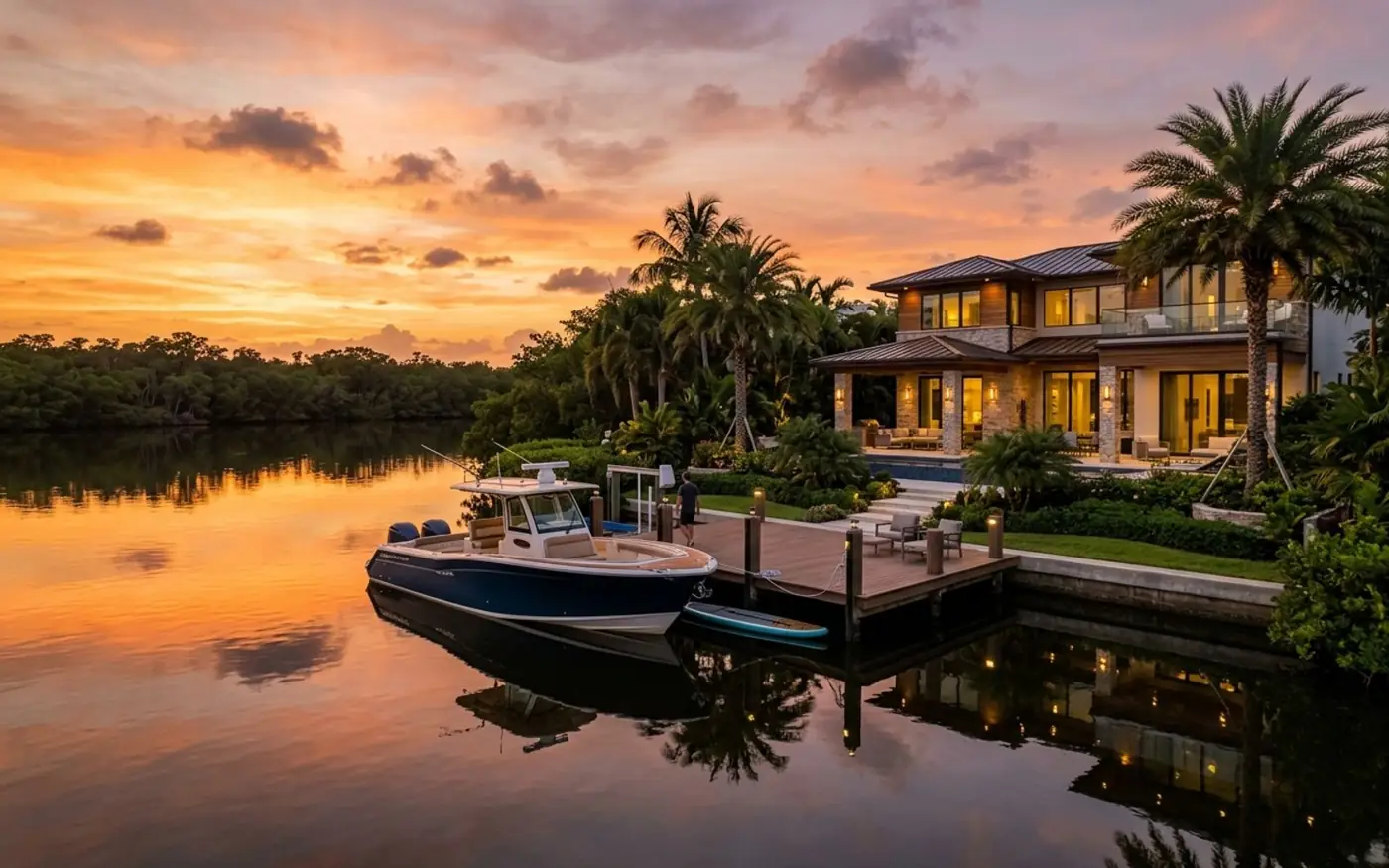
Waterfront homes carry a premium for a reason: views, boating and a lifestyle you cannot add later. They also carry costs and risks that inland homes do not, from flood insurance to seawall repairs.
Ryan and Megan help buyers and sellers price those factors into every deal, and they can write the loan as Mortgage Bankers with The Federal Savings Bank. See the flood zones and flood insurance guide.
What is available depends on where you look in Winter Garden.
| Type | What you get | What to check |
|---|---|---|
| Oceanfront | Beach access and ocean views | Coastal Construction Control Line rules, wind and flood exposure, salt air wear |
| Intracoastal or river | Protected water, boating, sunsets | Dock depth at low tide, bridge clearances, seawall |
| Lake | Calm water, recreation, views | Lake access rules, water levels, shoreline permits |
| Canal | Private dock at the door | Canal depth, route to open water, seawall age |
| Water view | Views without frontage | Lower cost to maintain; confirm the view is protected |

Check the flood zone at FEMA's Flood Map Service Center and ask for the elevation certificate. Under NFIP Risk Rating 2.0, each home is priced on its own risk, so get a quote for the specific address during your inspection period.
A failing seawall can cost a buyer a large repair bill. Look for cracks, leaning, gaps at the cap and soil loss behind the wall.
Confirm the dock and lift were permitted and are in good condition.

Oceanfront projects seaward of Florida's Coastal Construction Control Line may need state permits before you can add or rebuild.

Section 689.302, Florida Statutes, requires sellers of residential property to give buyers a written flood disclosure at or before the time the contract is signed. It covers:
Sellers also must disclose known material defects that are not readily observable. Ryan and Megan help sellers gather these documents before listing.
Depending on the part of Winter Garden, you may find ocean, river, Intracoastal, lake or canal frontage. Each has different views, boating access, insurance and maintenance.
If the home is in a FEMA Special Flood Hazard Area and you have a federally backed mortgage, yes. Many waterfront owners carry it either way, and Citizens is phasing in a flood requirement for its policyholders.
Cracks, leaning, gaps at the cap, soil loss behind the wall, tie back condition and drainage. A marine contractor or engineer gives the best read.
Usually, with permits. Docks and seawalls can require approval from local government, the Florida Department of Environmental Protection or a water management district, and sometimes the U.S. Army Corps of Engineers.
Under section 689.302, Florida Statutes, sellers of residential property must give a written flood disclosure at or before the contract covering known flood damage, flood claims and federal flood assistance.
NFIP building coverage is capped at $250,000 and contents at $100,000. Higher value homes often add excess or private flood coverage.
Flood checks, insurance quotes and a waterfront loan plan, from one team.
Ryan and Megan Winslow are licensed real estate brokers in Florida, Massachusetts, Connecticut and Rhode Island and Mortgage Bankers with The Federal Savings Bank. Ryan Winslow NMLS 2426605. Megan Winslow NMLS 2692933. Email [email protected].
Sources: FEMA Flood Map Service Center, FEMA National Flood Insurance Program, FloodSmart (NFIP), Citizens Property Insurance flood requirement, Section 689.302, Florida Statutes, Florida DEP Coastal Construction Control Line, Florida DEP submerged lands and environmental resources, U.S. Army Corps of Engineers, Jacksonville District regulatory, Johnson v. Davis, 480 So. 2d 625 (Fla. 1985), Zillow Home Value Index, U.S. Census Bureau QuickFacts. Updated October 2026. Rules change; confirm with Ryan and Megan before you act.